
You might be feeling a mix of things right now. Maybe you notice that your child is becoming self conscious about crooked front teeth, or you catch yourself hiding your smile in photos because of stains that never seem to lift, no matter what toothpaste you buy. You want everyone in your family to feel confident when they smile, yet the idea of cosmetic dentistry can sound expensive, complicated, or a little overwhelming—until you find a trusted Kingston dentist.
Because of this tension, you might be wondering where to start. Is there anything simple and safe that works for both adults and older kids. The good news is that there are a handful of cosmetic enhancements that fit comfortably within a general family dental setting. They focus on health first, appearance second, and they can often be tailored to different ages and budgets. In short, you can improve how your family’s smiles look without turning your life upside down.
This guide walks you through four cosmetic options that are especially friendly for families. It explains when they help, what to watch out for, and how to decide what feels right for you and your children.
Why are you even thinking about cosmetic dentistry for your family?
It often starts small. A teenager gets teased at school about a “yellow” smile. A parent chips a front tooth on a fork. A grandparent wants to feel a bit more polished for a big event. None of these are medical emergencies, yet they affect how people feel when they speak, laugh, or meet someone new.
When that happens, you may feel torn. On one hand, you want to protect your family’s oral health and stay practical about money. On the other hand, you know that confidence matters, especially for kids and teens. You might ask yourself if cosmetic care is “too much” or if it is actually a natural extension of looking after your family’s health.
There is another layer to this. The internet is full of quick fixes and home hacks. Whitening kits, mail order aligners, social media trends about shaving teeth for veneers. Some are misleading. Some are unsafe. You end up with more questions than answers. Is a family friendly cosmetic dental treatment even possible without going overboard.
In a general and cosmetic dentist office that cares for all ages, the approach is usually more balanced. The focus starts with healthy gums and teeth. Cosmetic enhancements are added on top of that foundation, not instead of it. That is what makes certain options especially well suited for a family setting.
See also: What to Expect From Professional Web Design Services in 2026
Cosmetic enhancement 1: Professional teeth whitening for teens and adults
One of the simplest ways to refresh a smile is professional whitening. Stains from coffee, tea, soda, or certain foods build up over time. Teens with braces in the past may notice uneven color once the brackets are off. Adults may feel that their smile has slowly dulled over the years.
At home whitening strips or social media “hacks” can be tempting. The problem is that many of them do not fit well, irritate the gums, or give patchy results. Some people even overuse them and end up with sensitivity that lingers.
In a family dental setting, whitening is customized. Your dentist checks the enamel and gums first. For many older teens and adults, a supervised whitening treatment can safely brighten the smile by several shades. You get guidance on how often to repeat it, how to manage sensitivity, and how to keep the results as long as possible.
If you want to understand more about how cosmetic whitening fits into overall oral health, the California Dental Association has a helpful overview of cosmetic dentistry options and safety.
Cosmetic enhancement 2: Tooth colored bonding for chips, gaps, and spots
What if the issue is not overall color, but a specific flaw. A small chip on a front tooth from a sports injury. A little gap that bothers your child in photos. A white or brown spot that stands out more than the rest of the tooth. These may be minor from a medical point of view, yet they can feel huge emotionally.
Tooth colored bonding is a gentle way to handle these concerns. The dentist uses a resin material that matches your tooth, shapes it carefully, then cures it with a special light. It can smooth out chips, soften sharp edges, and blend in spots or small gaps.
This works well in a family setting because it is usually quick, often requires little or no numbing, and can be adjusted as a child grows. It is also more affordable than porcelain veneers. The trade off is that bonding can stain over time and may need touch ups, but many families find that acceptable given the comfort and flexibility it offers.
Cosmetic enhancement 3: Clear aligners and simple orthodontic tweaks
Crooked or crowded teeth are common reasons families ask about cosmetic dental enhancements. You might worry about long braces treatments, frequent visits, and cost. At the same time, you know that aligned teeth are easier to clean and can prevent uneven wear or jaw strain in the long term.
For some teens and adults, clear aligners or limited orthodontic treatment can be offered right in a general and cosmetic dentist office. These are usually best for mild to moderate crowding or spacing. The benefit is that your family can often stay with the same familiar team, instead of juggling multiple offices.
There is an important caution here. Mail order aligner systems that skip in person exams can miss underlying problems like gum disease or jaw issues. In a family practice, your dentist monitors tooth movement and gum health, which adds a layer of safety and accountability.
Cosmetic enhancement 4: Conservative veneers and enamel reshaping
Sometimes a tooth has deeper discoloration, irregular shape, or noticeable wear that whitening and bonding cannot fully fix. In those cases, your dentist may talk with you about conservative veneers for adults or very careful enamel reshaping for older teens.
Veneers are thin coverings that go on the front of selected teeth. In a family minded office, the goal is to remove as little natural tooth as possible, and to use veneers only when simpler options are not enough. Enamel reshaping involves smoothing tiny areas of enamel to improve symmetry or reduce minor overlaps.
These treatments need thoughtful planning. They are not right for every age or situation. That is why they work best in a setting where the dentist knows your family history, your habits, and your goals, and can explain trade offs in clear language.
How do these family cosmetic options compare in real life?
You might still be wondering how these choices stack up side by side. The table below gives a simple comparison to help you think it through.
| Treatment | Best For | Typical Longevity | Comfort Level | Family Friendly Notes |
| Professional Whitening | Surface stains on teens and adults | 1 to 3 years with good care | Mild, temporary sensitivity for some people | Good starter cosmetic option, repeatable over time |
| Tooth Colored Bonding | Small chips, gaps, or spots | 3 to 7 years depending on habits | Usually very comfortable, often no numbing | Flexible for growing teens, more budget friendly |
| Clear Aligners / Simple Ortho | Mild to moderate crowding or spacing | Results can last with retainers | Gradual pressure, usually well tolerated | Improves both appearance and long term oral health |
| Conservative Veneers / Enamel Reshaping | Shape issues or deeper discoloration | 10+ years for well cared veneers | Some prep involved, discussed in advance | Better suited to adults, used selectively |
These are general ranges, not promises. Your family dentist can help you understand what is realistic for your specific situation, especially if there are habits like clenching or grinding that might shorten the life of cosmetic work.
What practical issues should you think about before choosing cosmetic care?
It helps to step back and ask a few grounding questions. What is bothering you or your child the most. Is it color, shape, crowding, or a mix. How much time and maintenance are you realistically willing to commit. Are there any underlying dental issues that should be fixed first, such as cavities or gum inflammation.
Cosmetic treatments work best on a healthy foundation. That means cleanings, cavity care, and gum health come first. This is one of the reasons a general and cosmetic dentist can be helpful. They can look at the whole picture and time cosmetic care so it supports long term health, not just a quick change in the mirror.
If you are curious about how oral health and overall wellbeing connect, especially for children, you may find the CDA’s oral health fact sheets useful as you think about your family’s needs.
Three steps you can take right now
1. Name the top one or two concerns for each family member
Write them down. For you it might be “stained front teeth.” For your teen it might be “crowded lower teeth” or “small chip on front tooth.” Being clear about priorities helps your dentist suggest the most appropriate cosmetic dental service instead of a one size fits all plan.
2. Schedule a cosmetic focused checkup with your general dentist
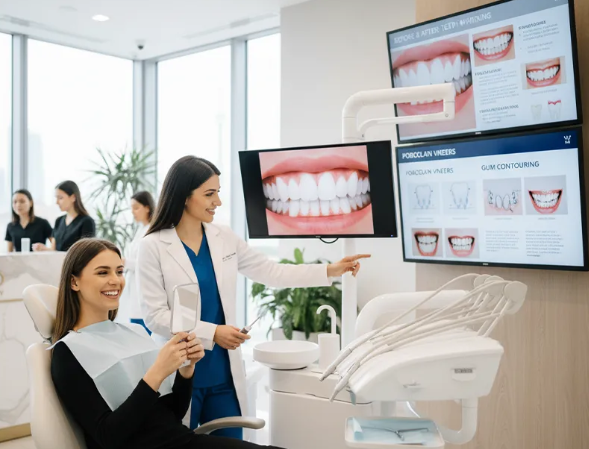
When you book, mention that you want to talk about family cosmetic options. Ask for photos or mock ups if available. A good general and cosmetic dentist will walk you through what is possible, what is wise to wait on, and what the likely costs and timelines are, without pressure.
3. Talk openly about budget, time, and comfort levels
Share what you can realistically spend, how often you can come in, and any fears your children may have. This allows the dentist to suggest phased care, starting with the simplest enhancement that offers the biggest emotional relief. For many families, that might be whitening or bonding, with more involved work considered later if needed.
Moving toward confident smiles, one thoughtful choice at a time
You do not have to choose between healthy teeth and attractive smiles. In a family setting, general and cosmetic dentistry can work together to support both. By focusing on a few well chosen cosmetic enhancements that fit different ages and stages, you can help your family feel more at ease in photos, at school, at work, and in daily life.
You are allowed to care about how your smile looks. You are also allowed to move slowly, ask questions, and start with small, conservative changes. With the right guidance, each step can be steady, safe, and aligned with who you are and what you value for your family.